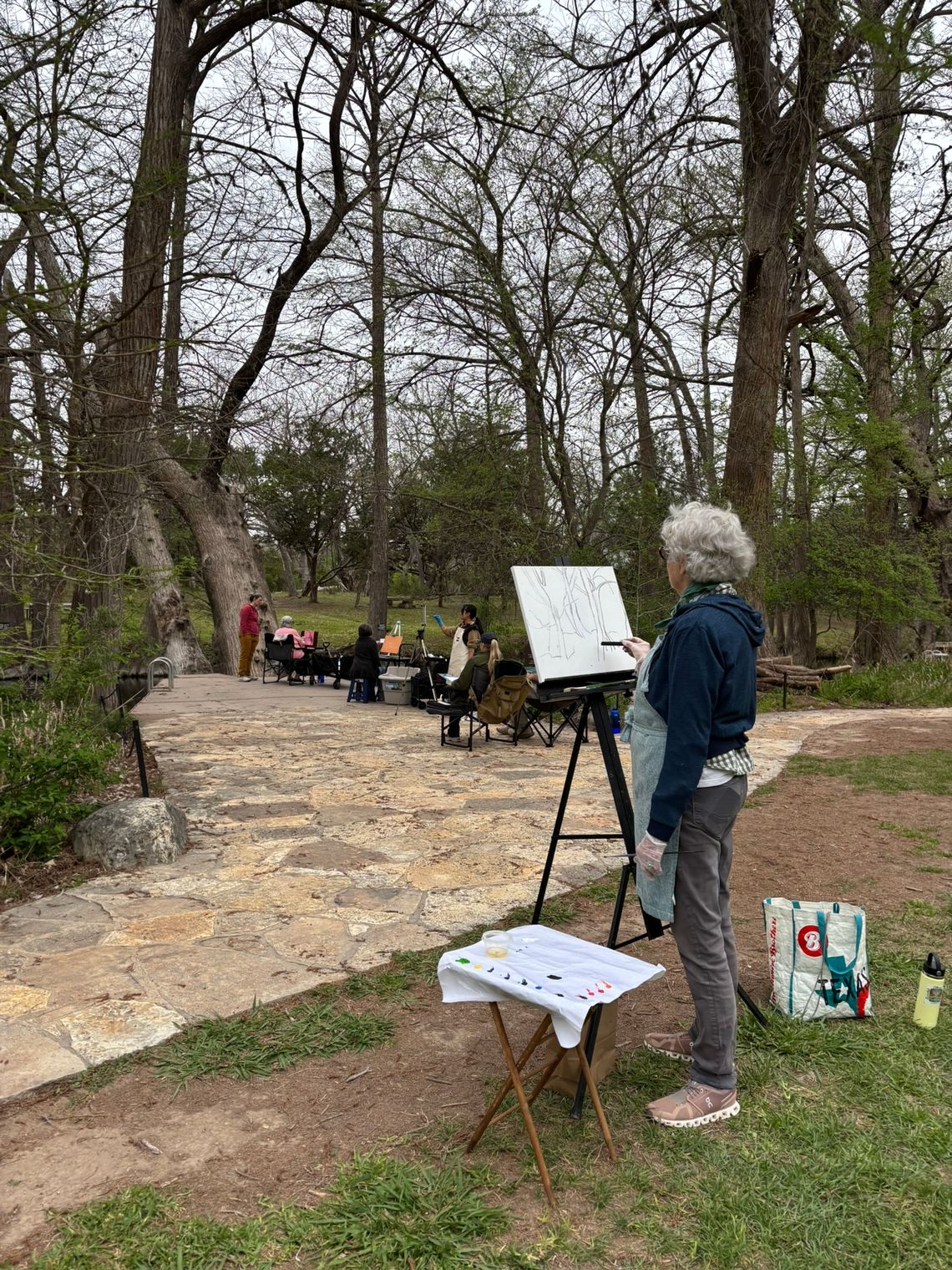
For those for whom the term plein air painting is not entirely clear, it’s possibly due to the term’s French origins. “En plein air” is a phrase that comes from the French language that means “in the open air,” that refers to the art of painting landscape portraiture outside in direct natural light, rather than in a studio.
According to Wikipedia, “the method contrasts with studio painting or academic rules that might create a predetermined look,” enabling an artist to better capture the changing details of weather and light. The concept is credited to Pierre-Henri de Valenciennes, (1750–1819).
“The invention of portable canvases and easels allowed the practice to develop,” asserts Wikipedia, “particularly in France, and in the early 1830s the Barbizon School of painting in natural light was highly influential. Amongst the most prominent features of this school were its tonal qualities, colour, loose brushwork and softness of form.”
Called the “largest movement in art history. . . and growing” by PleinAir magazine writer Eric Rhoads, the movement has become a lifestyle for amateurs, hobbyists and professionals.
“It involves being outdoors in beautiful places, provides some exercise and can lead to world travel.”
Rhoads’ comments are hardly news to the Plein Air Painting Group of Wimberley. Wrangled by long-time painter Jim Street, the group began during the years of the COVID-19 pandemic.
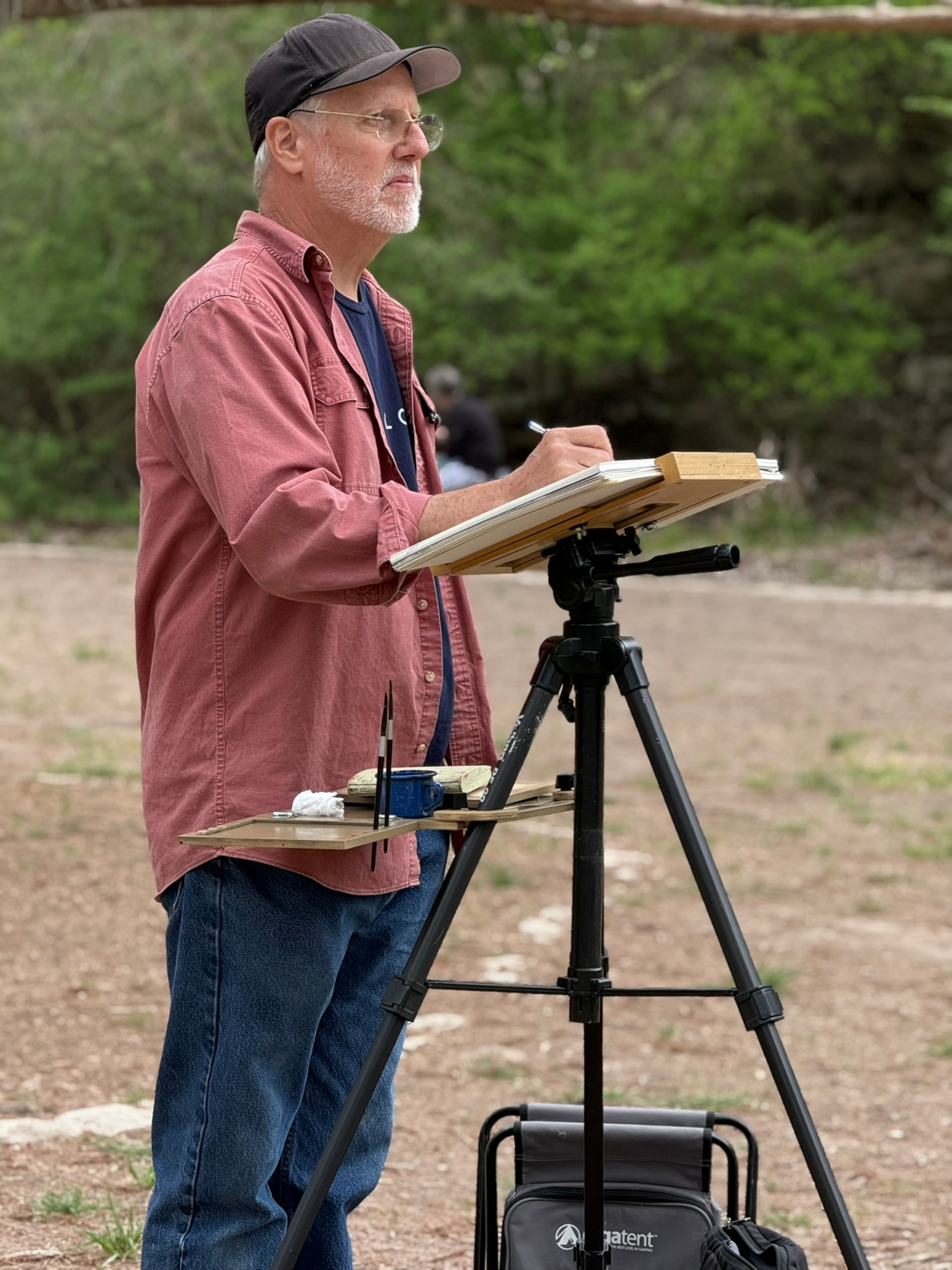
“Most of us were studio painters. We were all itching to get out and do something so a couple of us got together and said, ‘Lets just go out and paint. We can keep our distance and do our thing.’ And it grew from that. It started with two of us and then a third person joined. We decided to find places around the local area and get out and paint one day a week.”
The benefits of outdoor painting are numerous. Because light can change in the matter of a couple of hours, artists need to capture scenes quickly, taking in the big picture rather than the details. It also provides the opportunity to socialize and experience the area with like-minded people who are engaged in a similar activity. The group’s commitment to meeting regularly helps keep each artist accountable and motivated. For some, it leads to making them more open to conversations with non-artists about their work. Because studio painting is primarily a solitary endeavor, plein air painting can improve an artist’s ability to talk about their art and personal approach.
“The appeal, to me, is capturing something quickly,” said Street. “As a studio painter I was very slow and meticulous and my work was very detailed. I can’t do that in two or three hours when I’m on location. I’ve got to paint fast. Sometimes I’ll go back and touch things up afterwards. It’s really changed the way that I paint. Even in my studio painting I don’t get mired down in details like I used to.” Working quickly is also determined by outdoor conditions. “In this climate we often start around 9 a.m. By noon, you don’t want to be out in the sun anymore.”
When asked if he’s okay with people asking him about his art while painting, Street said, “I am. Before taking up plein air painting, he said, “I never liked to do that and that’s one of the things that kept me from taking up plein air painting for a long time. When I was a studio painter, I didn't want to be interrupted but the interruptions don’t bother me now. I’ve gotten used to it and look at it as an opportunity to teach people to talk about art and to engage with them. They walk up because they’re interested.”
“In today's world, a lot of schools don’t have art programs anymore and arts are funded or encouraged. I love to see parents or grandparents show up with small kids and encourage them. If a young person comes up and asks questions, one of the guys I paint with, Tim Leibrock, oftentimes, tells the child, ‘Hey take a paint brush and put some marks on my painting for me.’ You never know what impact you’re making on a young life. That’s important.”
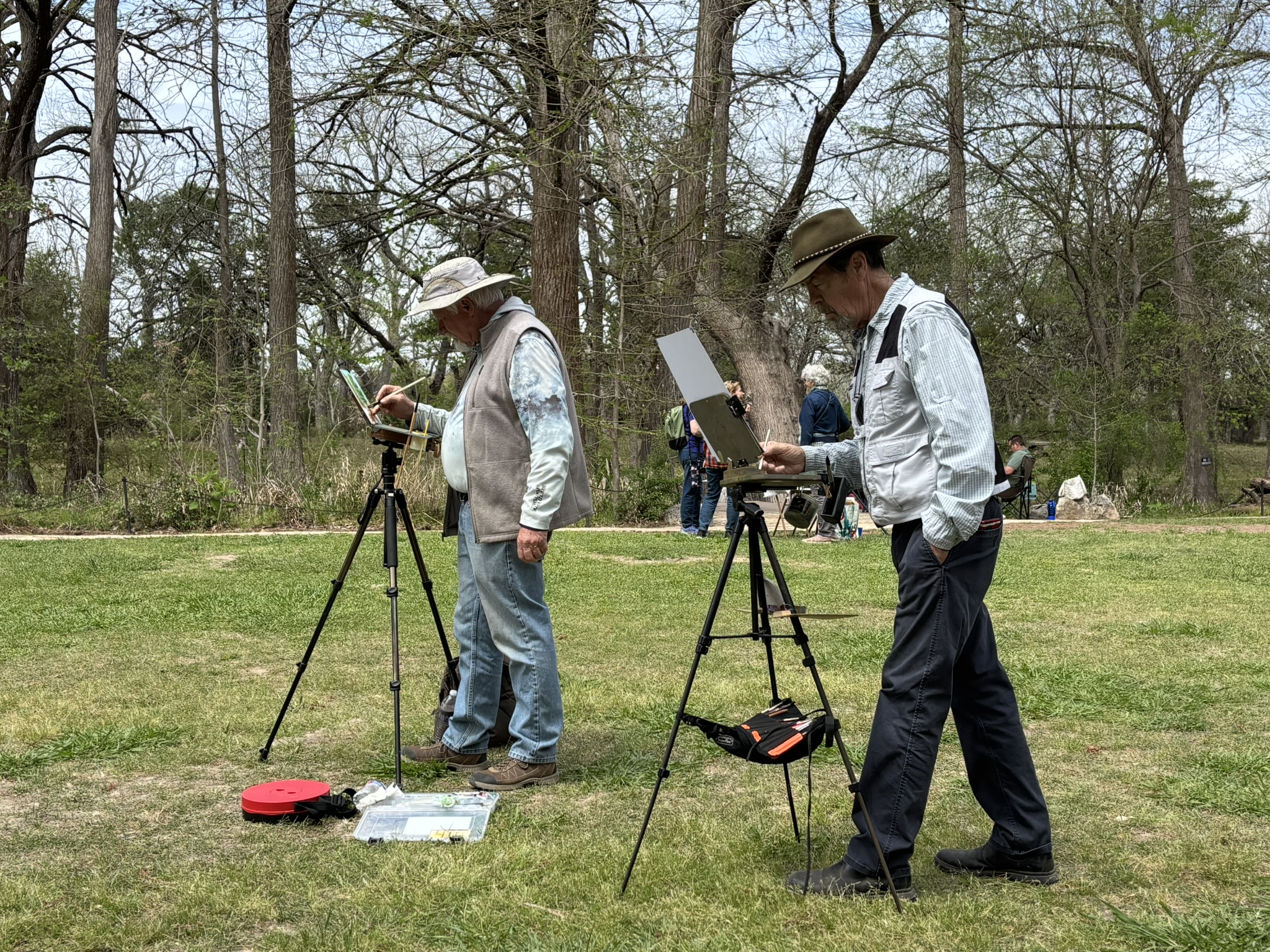
The group decides on painting locations through emails and texts, often based on suggestions from its members. “We’ve been invited to some wonderful locations,” said Street. People will say, ‘Hey, come and paint my ranch or I’ve got a historic building you might like.’ In time, the motivation has evolved to capture things that are disappearing before they are gone forever. We go to Dripping Springs, Buda or San Marcos but mostly we visit ranches and private property around here.”
Not only does the group include painters working in watercolor, gouache, acrylics and oil, but photographers and sketchers and artists working in pastels. Their interest varies in terms of subject matter, with some preferring to paint old architecture and others focusing on landscapes and trees.
Street has an email list of more than 80 people who have expressed interest in painting with the group. “For newcomers who say they’ve never done this before, I suggest that they come out first and watch, ask questions of us and see what works for us and figure out what works for you, because we’re all different.”
Street’s equipment consists of a pre-packed backpack that he can pick up quickly. Over time, the painters, as a group, have refined their equipment, starting with bringing full studio setups and eventually simplifying to essentials. “When I come back from painting, I clean up my supplies, dry out my brushes, repack my backpack and stick it in the corner so that when it’s time to go again, I can just grab it,” he said.
This June, for the first time in Hays County history, four regional arts organizations are coming together to present a single plein air art exhibition spanning the entire county. The Hays County Arts Alliance — made up of Inspired Minds Art Center in Buda, the Dripping Springs Art League, the San Marcos Art League, and the Wimberley Valley Art League — will open its inaugural Plein Air Exhibition with a public reception on Saturday, June 27, from 3 to 6 p.m. at the Buda Welcome Center, 303 Main Street.
The exhibition brings together original plein air paintings created this past Spring during a four-event series hosted across Hays County. Each member organization hosted one paint out, all centered on the theme of water: Inspired Minds Art Center at Garison Memorial Park along Onion Creek in Buda on March 7, the Wimberley Valley Art League at Blue Hole Regional Park in Wimberley, March 28, the Dripping Springs Art League at Madrone Springs Ranch, April 11, and the San Marcos Art League at the Meadow Center for Water and the Environment in San Marcos on April 25. Dozens of artists from across the Hill Country participated, painting on location at some of the region’s most treasured natural sites.
The exhibition will remain on display through August 6 at the Buda Welcome Center, with all works available for sale directly through the artists. Admission to the June 27 reception and the full exhibition is free and open to the public.
“Organizing artists across four cities around a single shared theme has been one of the most rewarding things the Wimberley Valley Art League has been part of,” said Street who is a member of the Wimberley Valley Art League. “Blue Hole is one of our most treasured places, and the paintings that came out of that day capture something real about why this county is worth celebrating. We hope everyone comes out to see the full collection on June 27.”