Representatives from the Blanco-Cypress Watershed Protection Plan appeared at the May 12 Commissioners Court session to provide an overview of revised water usage predictions affecting the plan and to announce a new watershed coordinator.
The BCWPP is an interlocal agreement among Hays County, the Meadows Center for Water and the Environment, the Watershed Association, the city of Wimberley and the city of Woodcreek. The plan, established as a three-year pilot program in 2024, aims to create a permanent framework for watershed protection which emphasizes education, engagement and long-term sustainability.
The agreement provides funding to monitor water quality in Cypress Creek and the Blanco River upstream and downstream of the Wimberley Valley to assess whether surface water is meeting Federal Clean Water Act standards.
One of the stipulations of the agreement has been the addition of a supervisor within the Hays County Parks and Natural Resources department to oversee the plan. Melissa Wolter will begin her role as the BCWPP watershed coordinator on May 27.
Wolter is a Texas State University graduate with an undergraduate degree in Biology and a Master’s in Aquatic Resources. She was an Aquatic Science teacher at San Marcos High School from 2023 until earlier this year.
Karl Flocke, Hays County Director of Parks and Natural Resources, said that the work of the BCWPP impacts the county even in areas not adjacent to the Blanco River and Cypress Creek.
“Of course, [the agreement] has positive impacts on people and the environment well beyond those two watersheds,” Flocke said. “It is a true partnership, leveraging the resources and expertise of our five organizations.”
The BCWPP includes two of Hays county’s most treasured park areas, according to Jenna Walker, Director of Watershed Studies at the Meadows Center.
“This plan covers some of Hays County's crown jewels, including Cypress Creek and Jacob’s Well, which are also sentinels for the health of our larger watersheds, and they support the identity of our county and attract people from all over the world.
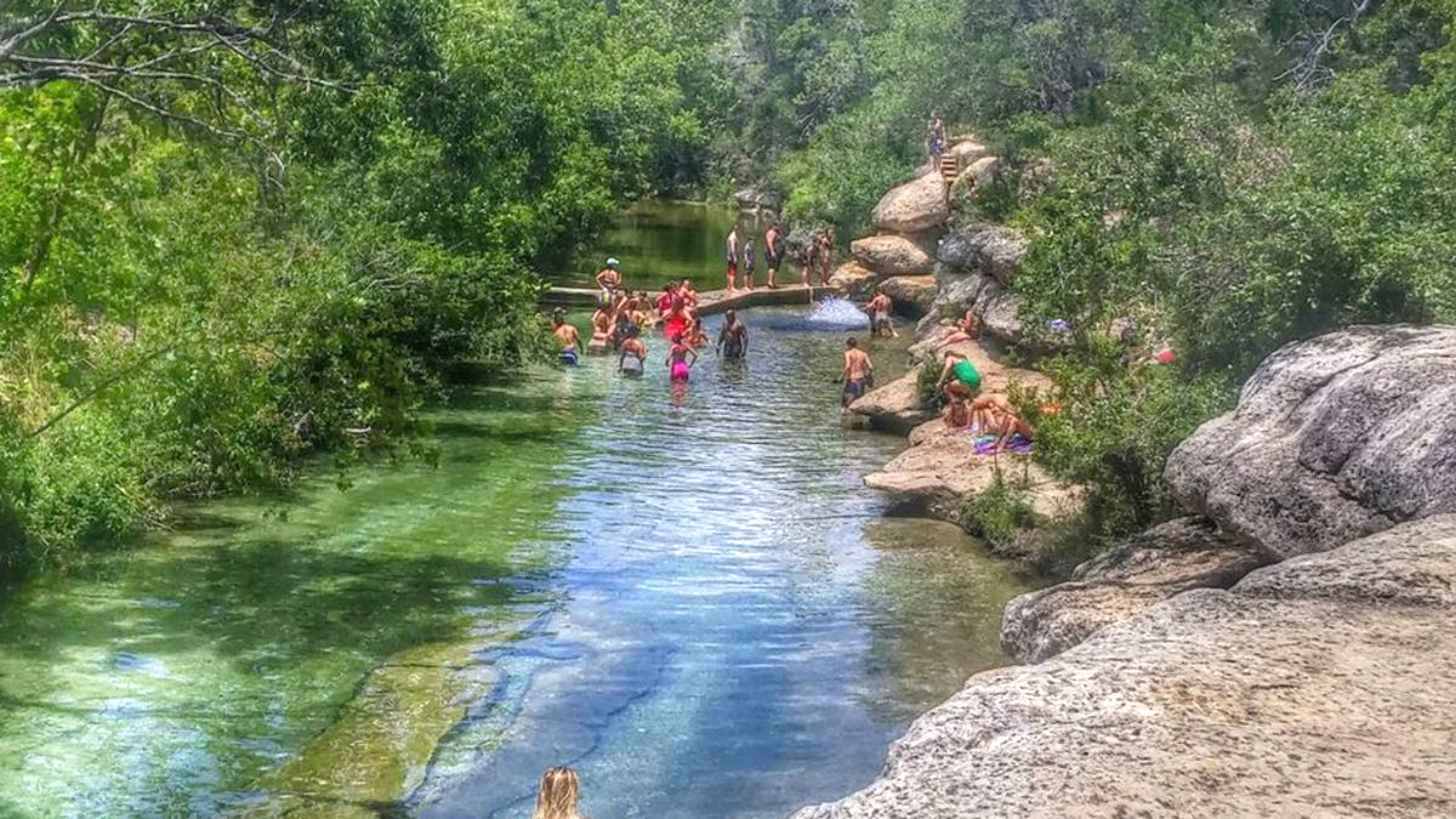
“They're also under increasing pressure from growth, storm water runoff, wastewater, land development, and as we all know, drought,” Walker said.
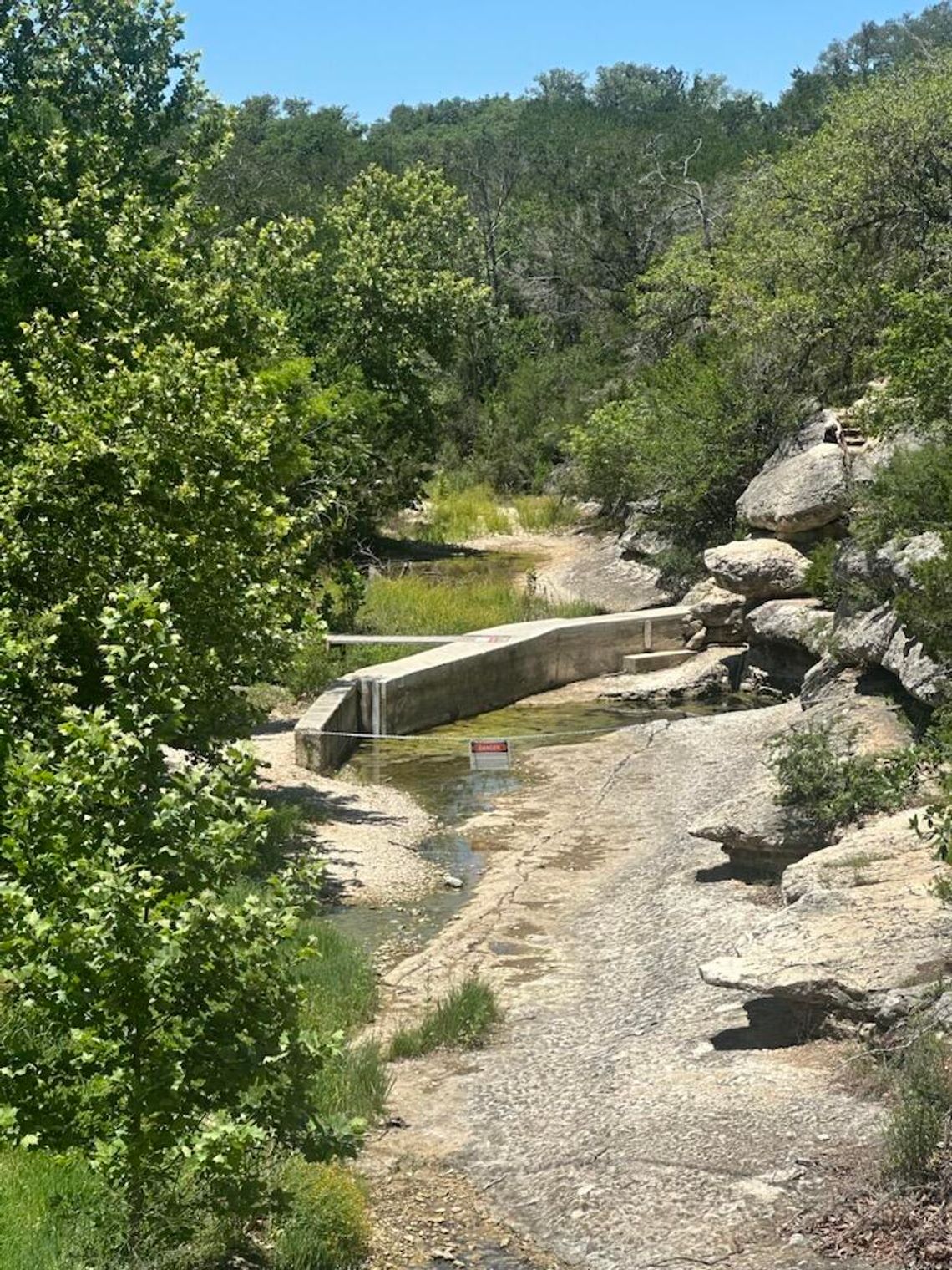
As part of her presentation to the court, Walker included a photo of the nearly dry Jacob’s Well taken earlier this month to illustrate the dramatic effects of the current drought.
David Baker, Executive Director of the Watershed Association, took that photo. He could not attend the court session due to a conflict in his schedule, but in an email to the Daily Record he described the effect of the drought as depicted in the photo.
“Jacob's Well is the key indicator of overall creek and aquifer health in our region,” Baker said. “The Well now spends long stretches at or near zero flow, with only brief recoveries after major rain events…. Per the Barton Springs-Edwards Aquifer Conservation District's most recent drought updates, the Well has been at zero flow continuously since November 2025.”
Baker said the BCWPP's groundwater protection work is a key part of efforts to keep Jacob’s Well flowing, along with rainwater harvesting and on-site reuse. The Watershed Association is also researching alternative water supplies, according to Baker.
The challenges of Hays County water conservation efforts were the focus of Walker’s presentation, which included data on the explosive population growth in the area as well as evolving municipal water supply strategies.
She compared the predicted population growth for Hays county from the 2022 Texas Water Development Board Five Year Plan to the preliminary TWDB report for 2027.
The 2022 plan predicts the Hays County population of 240,000 will grow to 730,000 in 2070. The preliminary draft of the 2027 plan revises the 2070 population estimate to 1,400,000.
“The numbers have doubled with the new plan,” Walker said. “So we have to plan accordingly and smartly…. it's going to take a lot of collaboration and sustained support from the county and the state and all of our partners.”
Walker also showed slides based on TWDB data of the projected municipal water supply strategies for Hays county for the next 50 years, which reflected a decreasing percentage of groundwater in the overall breakdown of the county’s water supply.

In the 2022 TWDB plan, groundwater was predicted to supply 37% of Hays County water over the next 50 years, with 94% of this water coming from the Carrizo-Wilcox Aquifer, 5% coming from the Trinity Aquifer and 1% coming from the Edwards Aquifer.
In the 2027 TWDB preliminary plan, groundwater is predicted to supply 8.9% of Hays County water over the next 50 years, dropping behind municipal conservation (27%), new major reservoirs (25.4%) and drought management (9.3%).
These figures emphasize the continuing importance of the Watershed agreement as the collaborative effort to meet these challenges.
Walker proposed that the BCWPP be made permanent and offered the following suggestions:
- Continued partner coordination around the BCWPP
- Support for ongoing water quality monitoring and watershed data interpretation
- Progress toward formalizing implementations roles and responsibilities
- Development of work planning and tracking tools
- Grant development and project identification
- Improved structure for communication among ILA (Interlocal Agreement) partners
Community education is an important aspect of the Protection Plan, according to Baker, a responsibility which includes public presentations like the one made by Walker, the special studies and planning initiatives led by the Watershed Association as well as ongoing efforts by Wimberley, Wood Creek and Hays County.
“The structure is intentionally collaborative so that no single entity carries the load alone, and the work continues beyond any one grant cycle,” according to Baker. “The goals are to protect water quality, sustain spring flow and baseflow and reduce nonpoint source pollution. And help our communities grow without losing the natural systems that make this region what it is.”
As part of the court discussion about the BCWPP, Flocke also announced a $50,000 grant from Texas A&M Forest Service to utilize tree-based solutions towards water quality.