The Earth Day celebration held last Saturday at Wimberley United Methodist Church brought together Springtime enthusiasts, Cajun culture, local organizations, UMC’s Green Team and its Methodist Men members to enjoy the season and to further cultivate among Wimberley residents something increasingly more vital and urgent — the stewardship of Earth.
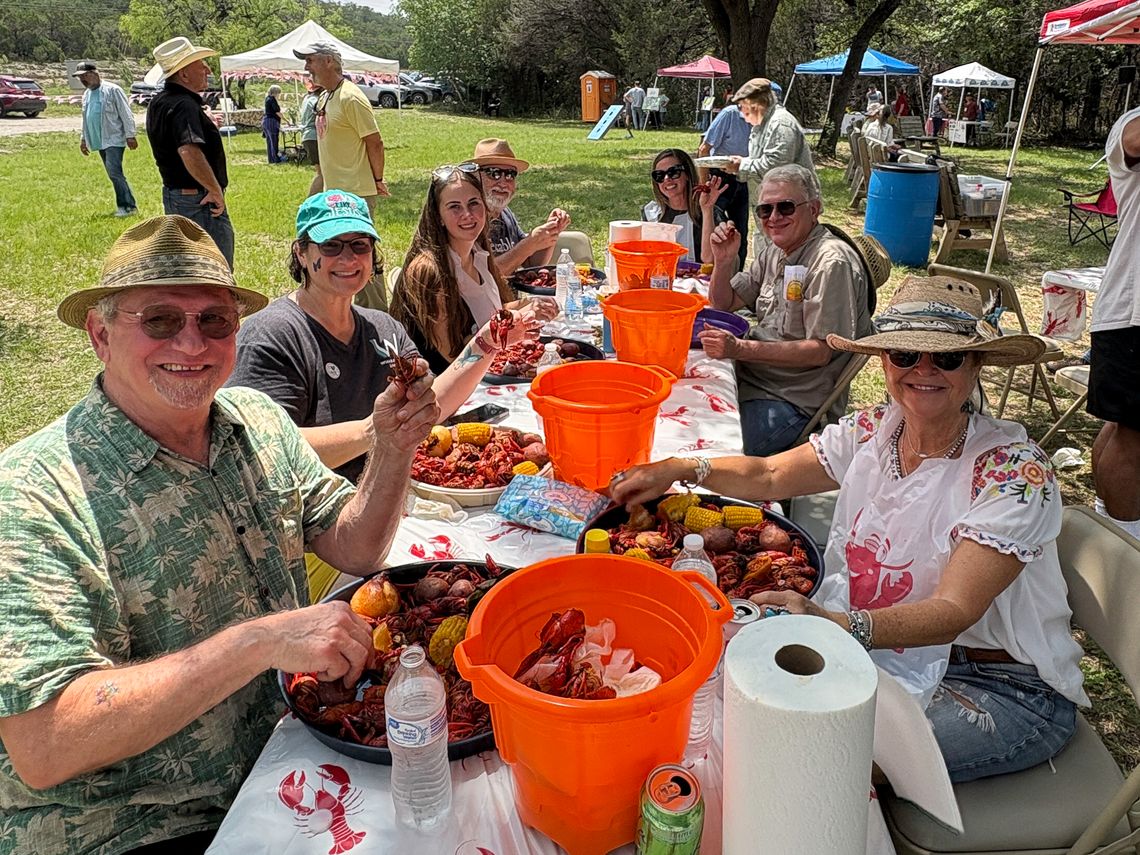
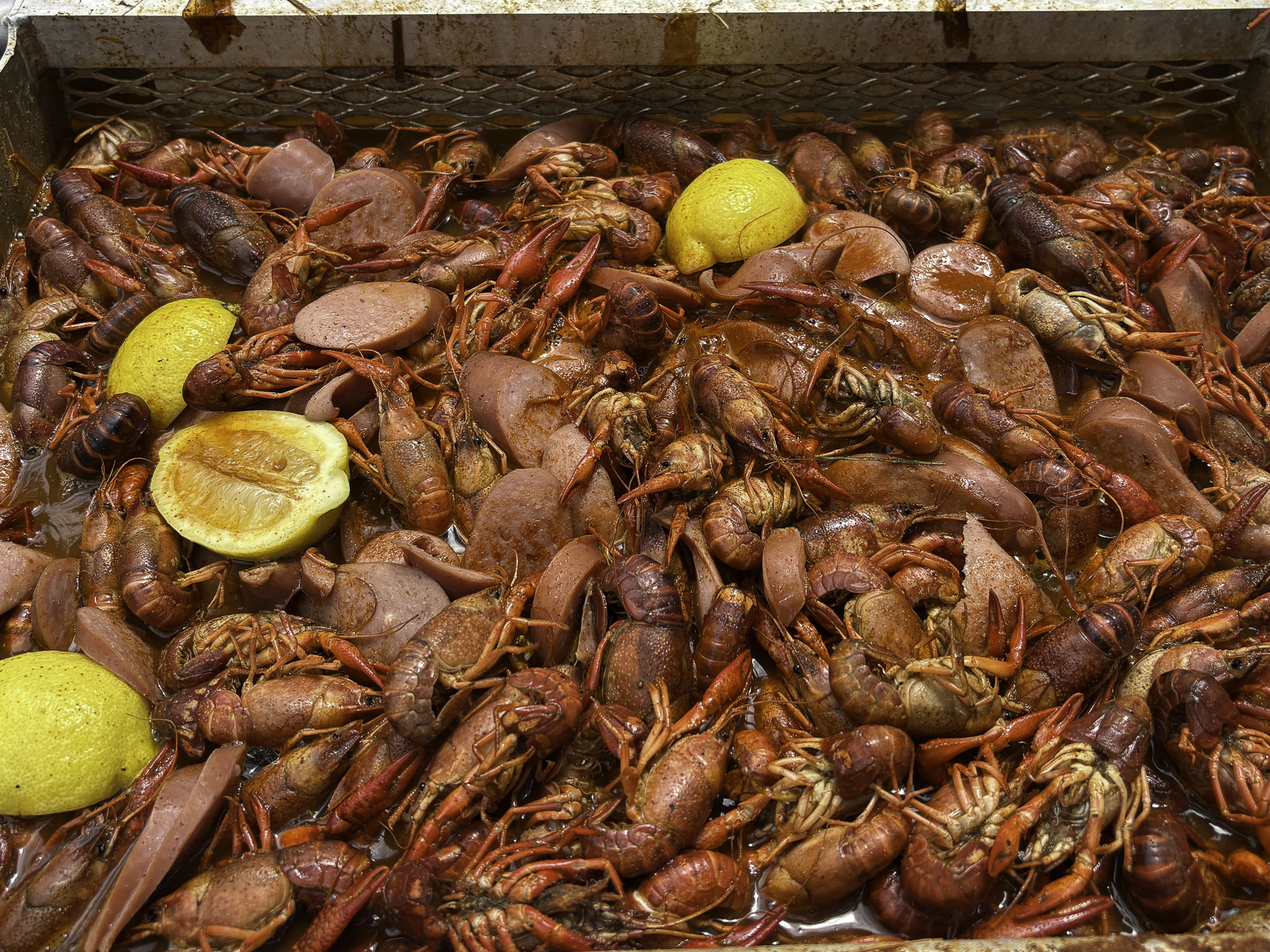
As Zydeco music enlivened the church grounds at the “Pumpkin Patch,” visitors tucked into heaping trays of a Cajun crawfish boil made flavorful with traditional seasonings, smoked sausage and cobbed corn. At the helm of the feast was the self-proclaimed “Resident Cajun,” Jeff Weems. Despite severely injuring his thumb the week before, Weems and his helpers cheerfully greeted guests and loaded up tables with generous portions of the boil and a little “something extra,” or “lagniappe” in Cajun-speak, of green beans spooned directly onto the table.
While guests enjoyed the bounty of the sea, the church’s Green Team and their invited presenters, among them the Hays County Master Naturalists, Keep Wimberley Beautiful, Texas Metal Tanks, Mothering Earth with Salwa Khan and Ecosystem Regeneration Artisans, quietly spoke with visitors about their activities which implicitly recognized the sanctity of the earth — for its embodiment as a sacred, living entity requiring reverence and protection.
Heading up UMC’s Green Team in Wimberley are Sandra Londa and Janyce Sisson. In April 2023, Londa taught a three-session class at the church called “The Theology ofEcology.” It was a class, she said, that she’d developed, refined and updated for 40 years.
After the class was over, Sisson remarked that for the most part, “we have been arrogant toward creation, viewing it as a commodity rather than a gift from the Creator.”
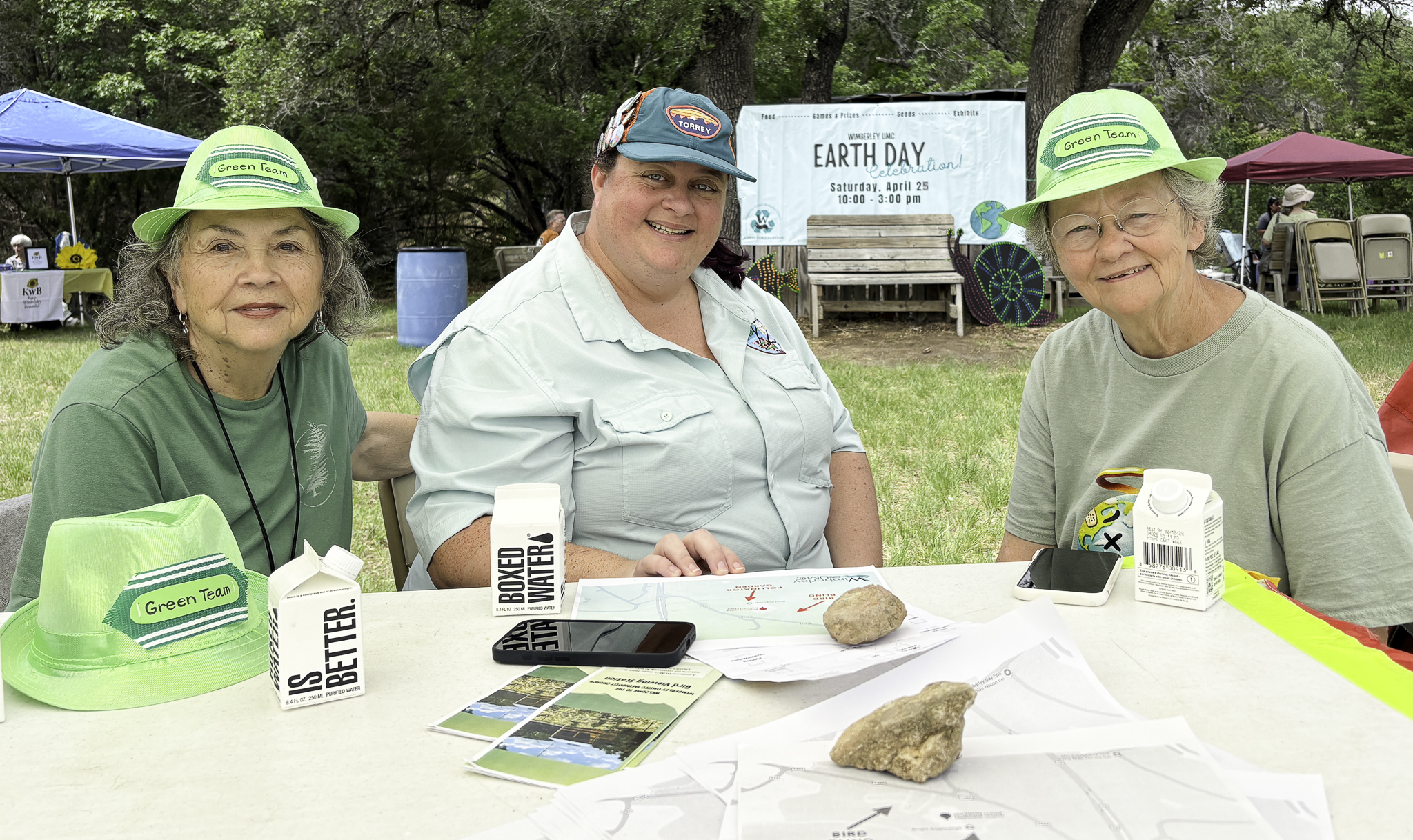
Flanked by Janyce Sisson, left, and Sandra Londa, right, co-directors of the Green Team program is Ornithologist Carrie Bucklin. Photo by Teresa Kendrick
It turns out that responsible stewardship of the earth has always been important in United Methodist Circles, dating back to John Wesley, the founder of Methodism. However, it wasn’t until May 2024, that the UMC as a whole began to take caring for the earth seriously.
According to Londa, every four years the entire church meets to conduct the business of the church in meetings called a General Conference that is attended by delegates from every region and church across the country.
“At the 2024 General Conference, Londa said, “the bishops of the church declared, ‘The planet is in peril,’ and set about updating the church’s books of Social Principles.”
They wrote, “Sustainability is crucial to the development of ecologically sound policies and practices that seek to restore balance to the natural world and end the disruptive relationships between humanity and the rest of God’s creation. We urge United Methodists to adopt sustainable habits and practices, including refraining from overconsumption, repurposing and recycling materials, avoiding products that pollute or otherwise harm the environment, and reducing the carbon footprints of individuals and families by reducing overall reliance on fossil fuels for heat, transportation and other goods.”
Every church, Londa said, “was strongly encouraged to follow these principles and to establish or re-instate a Green Team.”
When the news of this action reached Wimberley, Londa said, “Janyce and I jumped at the opportunity to start a Green Team. We took a week-long training offered by the Board of Discipleship in August 2024. We invited members of the congregation who were interested in any aspect of creation to join the team. On sign-up day, over 25 people joined.”
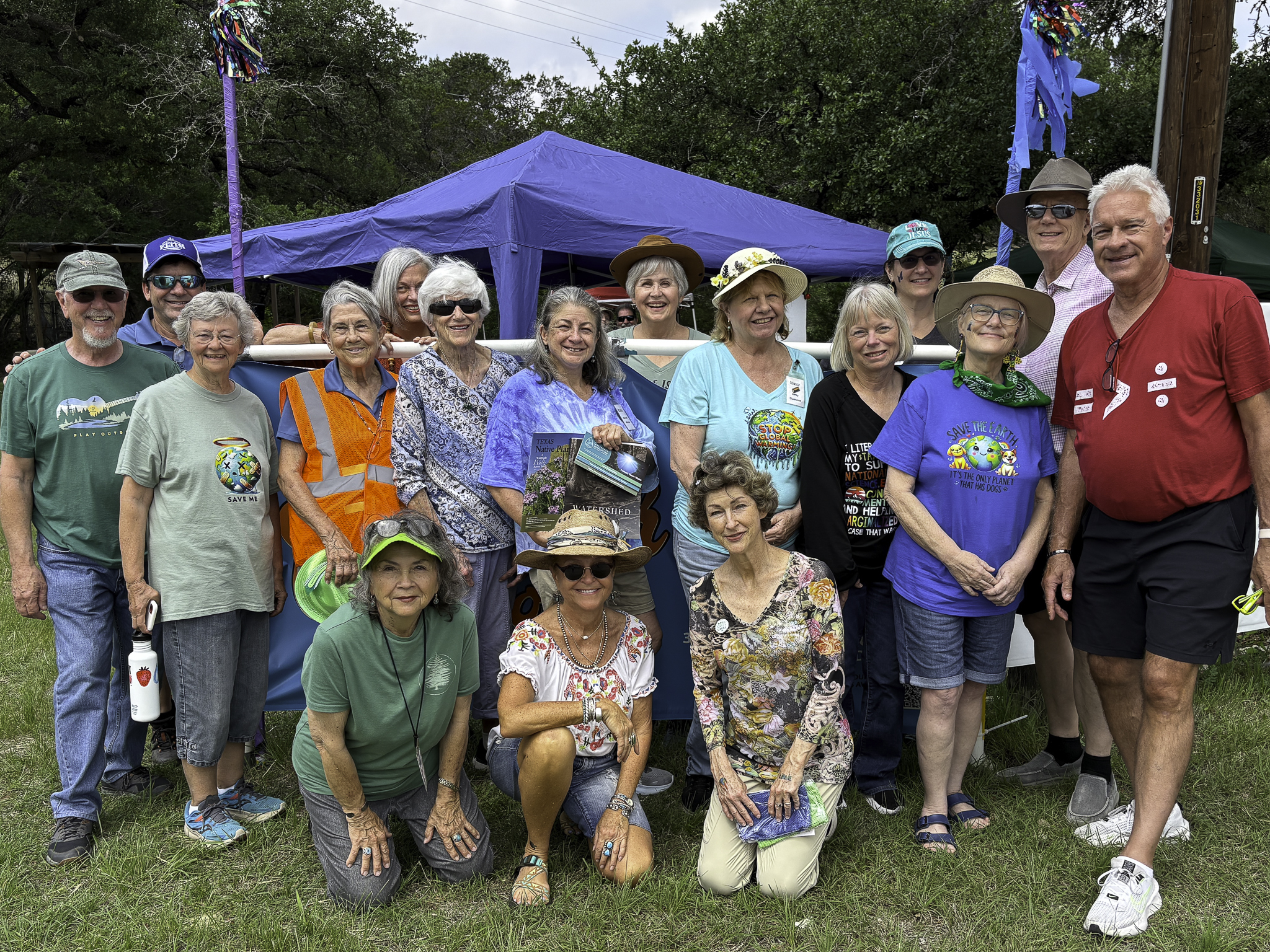
The Green Team seeks to “restore balance to the natural world and end the disruptive relationships between humanity and the rest of God’s creation.” Photo by Teresa Kendrick
Since then, the Green Team has attended workshops and meetings, held clean-up days for CR 1492, participated in Trunk or Treat at the Square, hosted a Trail of Lights display at Emily Ann and participated in “Plastic-Free July” in 2025.
Months before in April, the team hosted the lecture, “Water Matters,” with Dr. Robert Mace of the Meadows Center at Texas State University. Later in April they held their first Earth Day celebration. The team secured grants for a Bird Viewing Station, or Bird Blind, that was dedicated in September 2025.
Fellow environmental stewards in the community had taken notice. In November, Hays County Master Naturalists named the Green Team a nonprofit partner of the year at their gala in November, which both Londa and Sisson attended.
This year, with help from the Master Naturalists and the Native Plant Society of Texas, the team planted a pollinator garden.
For their next project, the team has enlisted Professor of Ornithology Carrie Bucklin of Texas State University who said, “We're applying for a grant through the Texas Parks and Wildlife Department. Every year TWPD organizes the Great Texas Birding Classic, and a portion of the funds they raise go to grant programs. Texas State is applying for a grant in conjunction with the Green Team and our Research Rangers project to try to enhance the UMC’s bird blind and get it set up as a birding hot spot on what we call the E bird, or Merlin app from the Cornell Lab of Ornithology.”
“We hope to create a map of the area in which we point out good spots to see certain birds,” Bucklin said. We’ll include information about the church, the Green Team and our Rangers program. And then we hope to establish a bird monitoring project in the Spring with my ornithology students, in conjunction with the Master Naturalists and any public member who uses the app iNaturalist, in which they track birds they see, and when and where they see them.
Evidence of the Green Team’s commitment to avoid products that pollute or otherwise harm the environment at Earth Day were everywhere: boxed waters, aluminum take home cups, water dispensers and the absence of styrofoam and single-use plastics.
“We try to keep things like styrofoam and plastic to a very minimum at church gatherings. We use glasses, regular dishes, forks and knives whenever we can,” said Sisson.
After several visitors stopped at the Green Team table to talk with Londa and Sisson, Londa shared a quote she loves from Thomas Aquinas, inspired by a passage from the book of Ecclesiastes in the Bible.
“Sacred writings are bound in two volumes — that of creation and that of the Holy Scriptures… Visible creatures are like a book in which we read the knowledge of God. One has every right to call God’s creatures God’s ‘works,’ for they express the divine mind just as effects manifest their cause. ‘The works of the Lord are the words of the Lord.’ (Eccles. 42.15)”
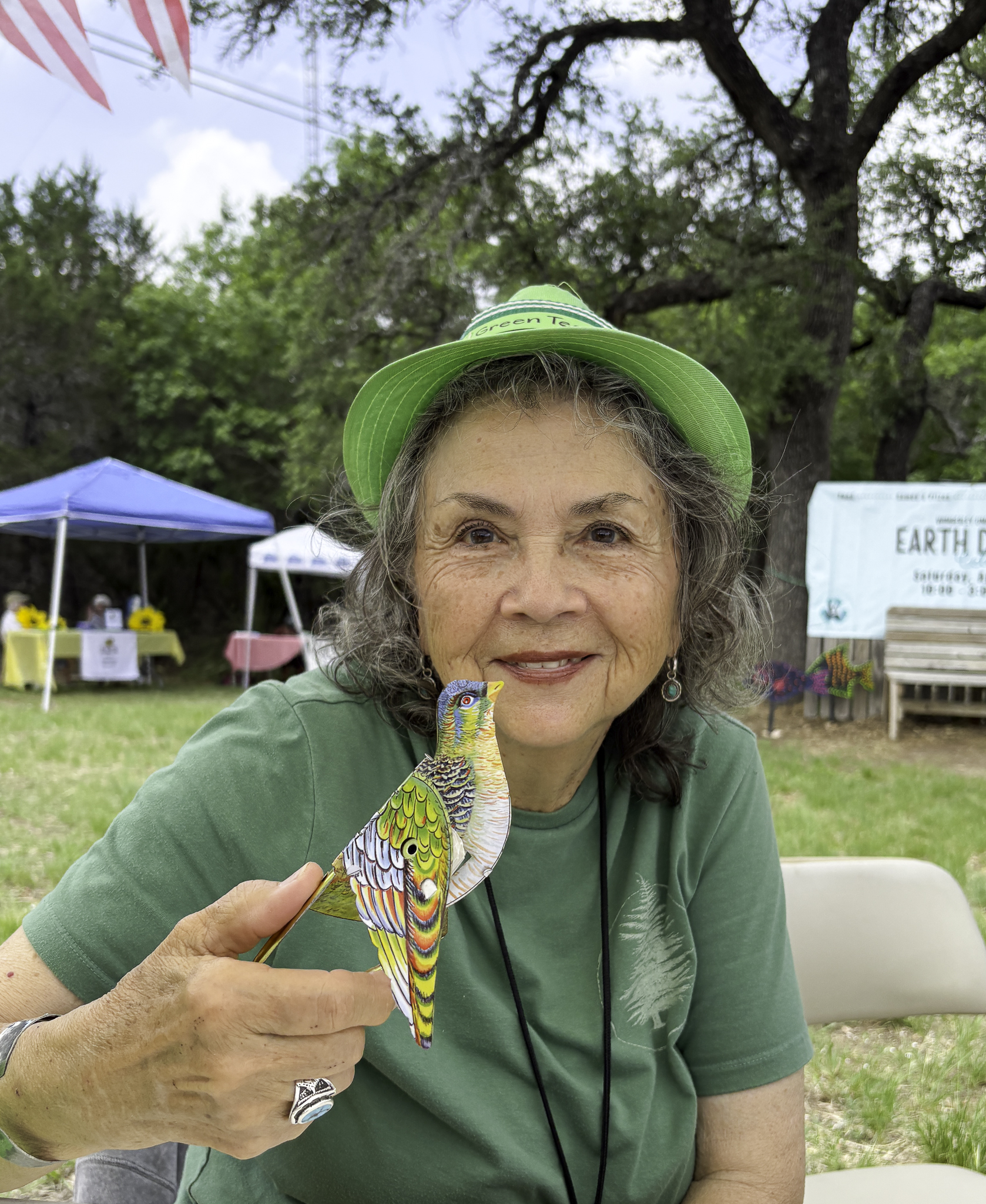
Janyce Sisson demonstrates an unusual
tweeting mechanical bird. Photo by Teresa Kendrick