Submitted Photo
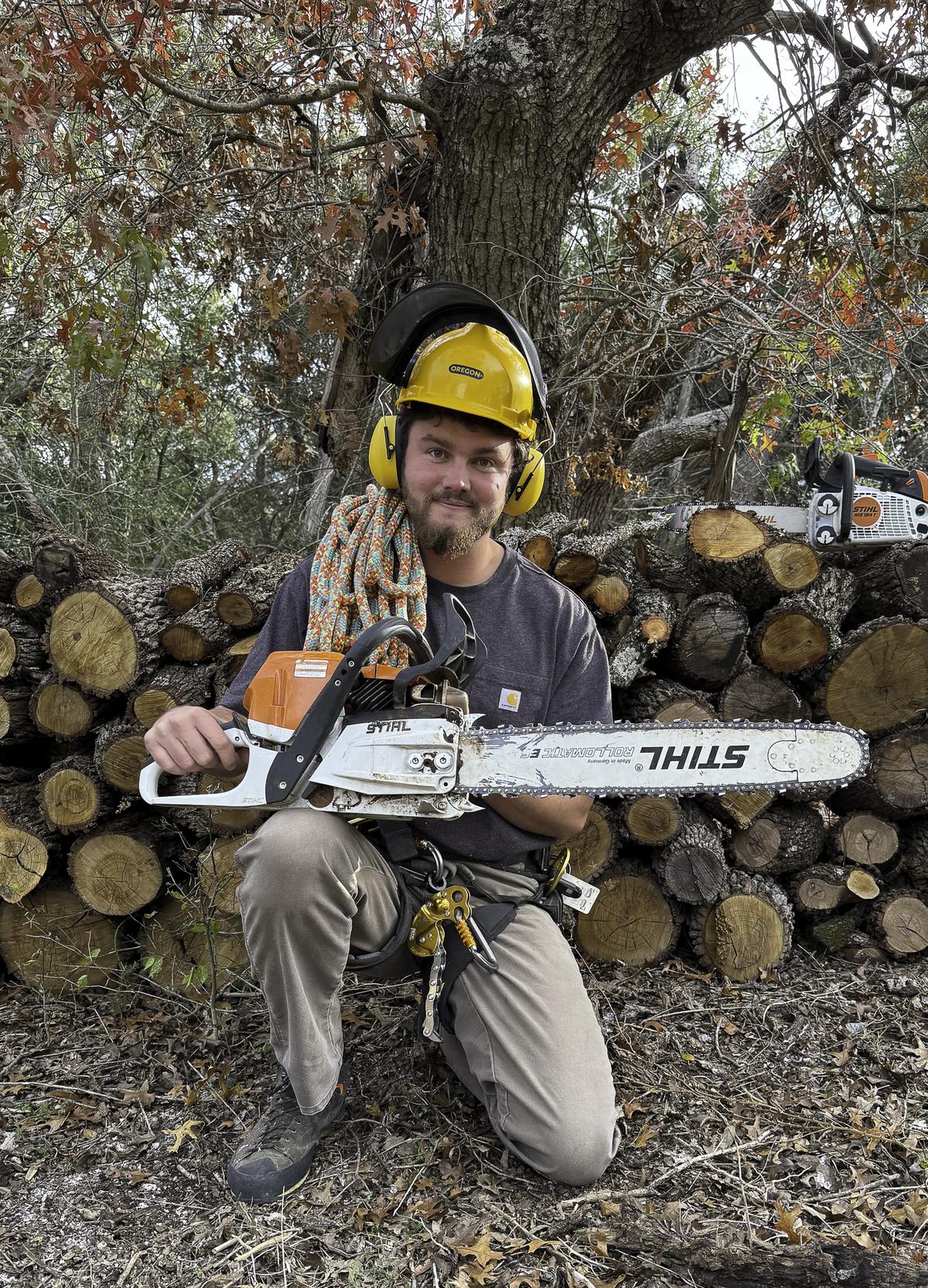
Bonilla suited up for work

Submitted Photo
As a student at Oregon State University, Bonilla, center, was a kayaking and whitewater rafting guide.
Submitted Photo
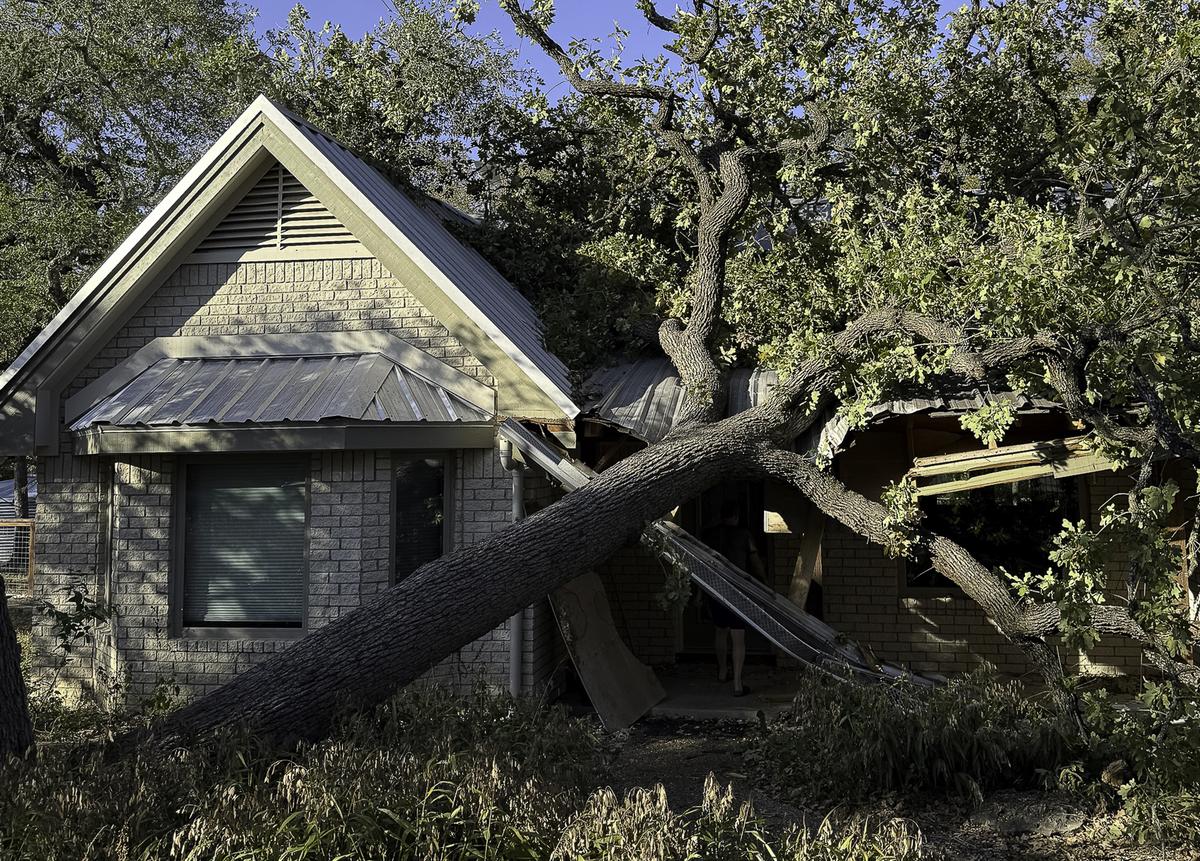
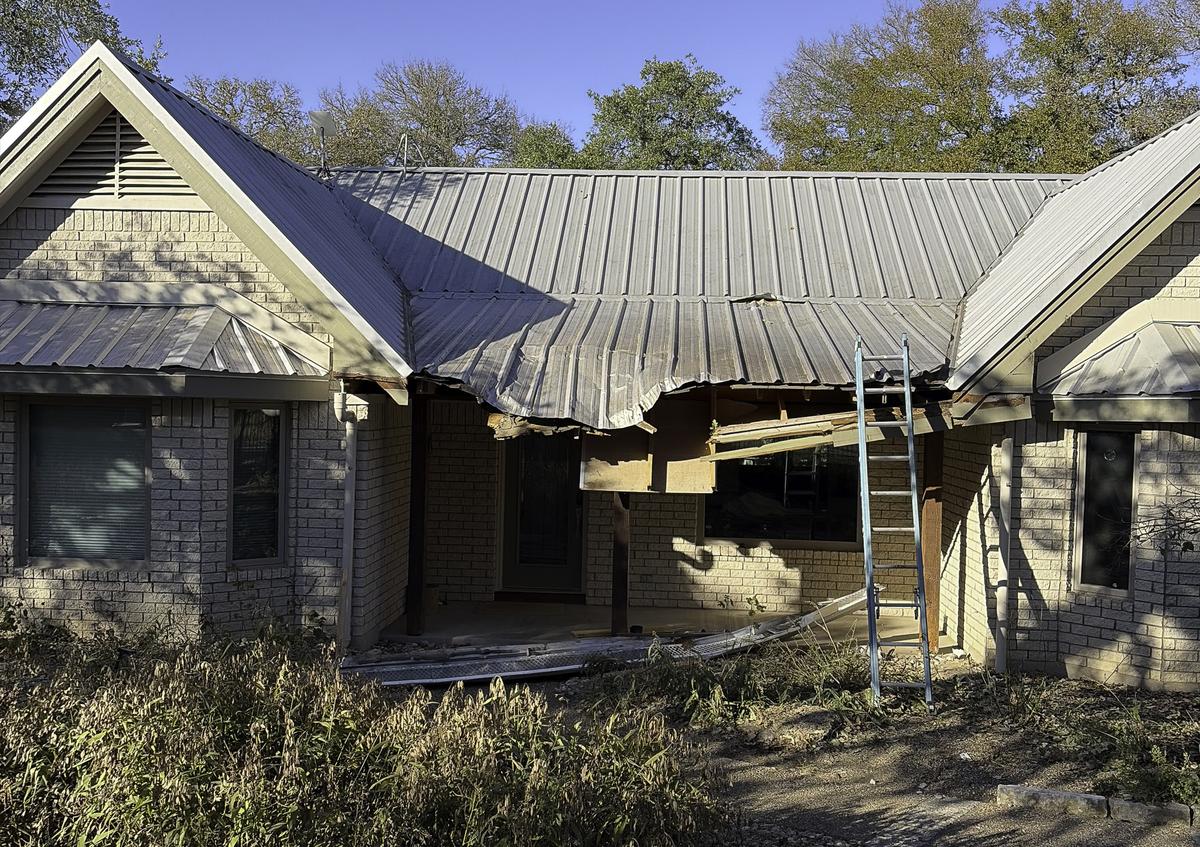
Before and after photos of the damage caused by mature oaks impacted by storms.
Submitted Photo
“It’s satisfying to know that I’ve been able to fix a problem that the owner couldn’t handle on their own.”
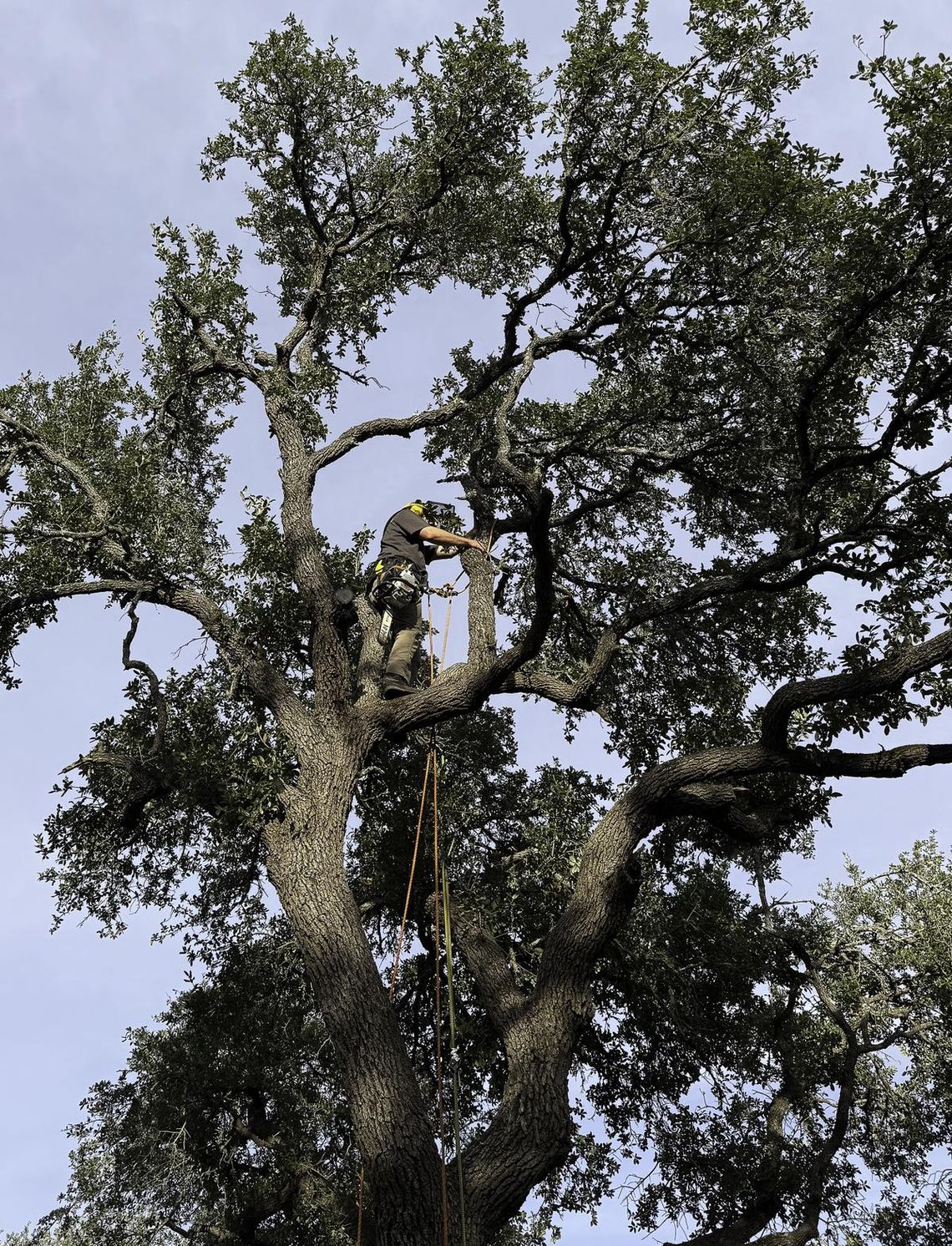
For Wimberley resident Santiago Bonilla, getting to work means climbing the equivalent of a ten story building. As the owner of Wimberley Tree Service, though, the climb is all in a day’s work.
Climbing Texas’ tall trees and keeping them in prime condition is his specialty. But for this arborist, who earned his university degree among the Douglas Fir, White Oaks, Maple and Ash trees of the Pacific Northwest, a 100-foot-tree isn’t all that big.
“There is a huge difference between the trees in Oregon and the ones in the Wimberley area. Here we trim and remove large trees up to roughly 100 feet, but there, most of the trees are at least that tall.”
Bonilla, who goes by his nickname, Santos, moved to Wimberley when he was five. From growing up on a ranch, he learned early the immense labor and effort it took to keep a large property looking its best.
“From feeding goats and horses, to fixing water lines and dealing with power outages, I learned it all,” said Bonilla. “At 16, I was hired by a local contractor to help build decks, fences and houses and to work on trees. At 19, I was doing much of the tree work on my own.”
It seems the allure and challenge of working with trees stuck with him. When it came time for college, Bonilla found the Fisheries, Wildlife and Conservation Sciences program at Oregon State University. While a student, he worked as a whitewater rafting and kayaking guide where he learned that trees are one of the biggest threats to whitewater boaters in the Pacific Northwest. He was hired by a local arborist to help remove huge trees and other obstructions on the North Santiam River.
“This is where I learned how to log and cut large trees,” Bonilla said. He spent the next four years working with the arborist and running his own tree and landscape business.
After graduation, Bonilla returned to Wimberley and began putting his education and experience to work. The response, he says, has been gratifying. “We have been exceeding my expectations and I have only the people from my hometown to thank.”
For home and landowners, tree care and removal is literally out of their reach. It can cause people to feel frustrated and hopeless at the sheer scale of the project.
But not for Bonilla. As a self-professed “detail guy,” he is, he said, very comfortable with the steps required to tend to large trees and properties. After receiving a call from a landowner, Bonilla visits the property and makes an assessment. Once that is complete, he arrives with an impressive list of equipment.
”Usually my truck has about 6 to 7 chainsaws on it, a leaf blower, rakes, pruning spray, 70% isopropyl alcohol mix for cleansing blades, a first aid kit, gas for the tools, oil, bar oil, various ropes (some for climbing, some for rigging), mechanical ascension devices for climbing, harnesses, a wheelbarrow, multiple ladders, my 16-foot dump trailer, food and water for the crew, straps and spare chainsaw blades.” Depending on the job, his equipment list can also include cranes, lifts and wood chippers. This is certainly no profession for the person who likes to travel light.
When working on properties that have had oak wilt in the past, or are otherwise susceptible, he explained how he prevents spreading the disease. “We make proper cuts so the tree can heal itself quickly and then seal every cut, even the small ones, with pruning seal to prevent sap from flowing and attracting the beetles that spread the disease,” Bonilla said. “We also sanitize our chains and saws with 70% isopropyl alcohol between each tree.”
From there, the discussion blossomed into a much wider one in which he described the conservation involved with caring for Texas giants. “Tree health is a priority. When we clear land of cedars, it helps the larger hardwood trees to retain more water and nutrients, which is especially important now that water is difficult to come by.”
“We also try to educate property owners on habitat patch dynamics,” he continued. “The concept is to create multiple sub ecosystems that are conducive to wildlife, pollination and ecosystem health. We encourage homeowners to prioritize native species and to protect places like riparian zones on their property.”
The best part of his work, he says, though, comes at the completion of the project. “The most satisfying thing is looking at a job at the end of the day when I’m mentally and physically tired, but happy. I can see all of the progress we made and how much better everything looks. It’s also satisfying to know that I’ve been able to fix a problem that the owner didn’t know how to handle on their own.”