Go to main contentsGo to main menu
Monday, December 15, 2025 at 9:44 PM
Ad

From Donor to Discovery

From Donor to Discovery
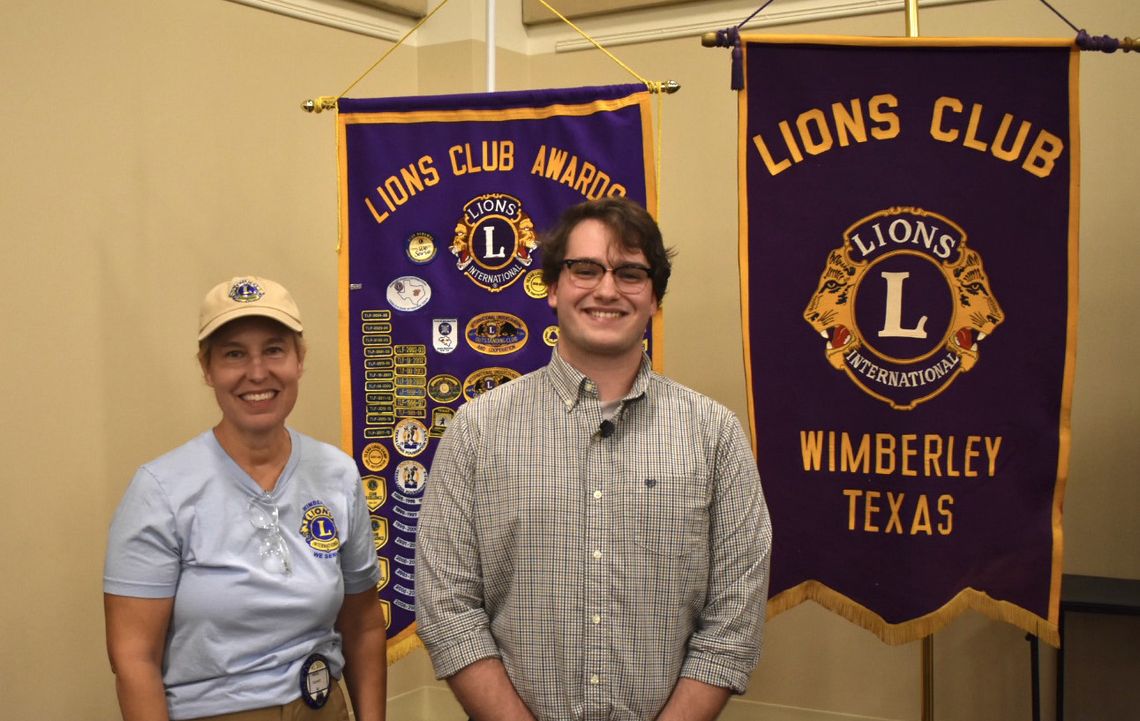
WIMBERLEY LIONS CLUB PRESIDENT MINDY CURNUTT POSES WITH GUEST SPEAKER CHRIS MCMILLIAN. DAILY RECORD PHOTO BY REBEKAH PORTER

Wimberley Lions club hosts forum on TXST body farm

Death can seem like the end of a story but for those who donate their body to the Texas State Forensic Anthropology Center, a new chapter begins. Donor discoveries provide students with the experience to assist detectives and disaster teams in solving crimes and locating lost remains.

Closed to the general public, the forensic facilities have long sparked the interest of the morbidly curious. This intrigue led to a packed house as over a hundred people filled the Wimberley Community Center on a brisk Tuesday evening. Hosted by the Wimberley Lions Club, TXST graduate student Chris McMillan walked the crowd beyond the fence and into 26 acres of forensic findings.

Often called the “body farm” by locals, researchers refer to the Forensic Anthropology Research Facility (FARF) as an outdoor human decomposition research laboratory. Located within Texas State’s Freeman Ranch, the facility is the largest of its kind in the world. Researchers use FARF to gain knowledge on human decomposition, which aids in deter- mining important information like time since death, or in some cases, the age and sex of the deceased though the process of bone identification.

McMillan walked the crowd through his experience at FARF and how the TXST facility is just one of a myriad of facilities around the world dedicated to studying decay. The first facility of its kind was started at the University of Tennessee in 1981 by William M. Bass.

“He pushed the idea forward of creating these facilities to give a greater understanding of decomposition and to allow for more research to be conducted in that area,” McMillian said.

It wasn’t until 2005 that more facilities started to pop up across the country. The biodiversity and climates of different regions allow for the decomposition database to grow to account for a variety of geographical conditions, giving researchers and forensic specialists the tools to assist law enforcement or help identify those once lost.

The decay of donors helps to train research students and investigate unsolved crimes. Even their bones can provide vital data in forensic analysis and crucial clues to cold case detectives.

“It helps to develop a skeletal collection of known individuals that can help inform research for forensic anthropologists and biological anthropologists who are interested in various types of skeletal research,” McMillian said.

The facilities aren’t purely for research. Many of the TXST professors, researchers and students aid local law enforcement at recovery sites and in post-mortem identification.

“Whenever they report skeletal remains, they’ll give us a call, and then we’ll send out forensic anthropologists and masters and doctoral students to assist with the research,” McMillian said.

The farm is also used by law enforcement and fire departments for training and locating remains. There are mock apartment buildings and cars where firefighters can train in simulated fire recovery scenarios.

For more information on research, workshops or how to donate the ultimate gift to the Forensic Anthropology Center visit txst.edu/anthropology/ facts.html. For more information on the Wimberley Lions Club and upcoming public forums visit wimberleylions. com

TXST BIOLOGICAL ANTHROPOLOGY MASTERS STUDENT CHRIS MCMILLIAN SPOKE ABOUT RESEARCH AND RESCUE. DAILY RECORD PHOTO BY REBEKAH PORTER
DAILY RECORD PHOTO BY REBEKAH PORTER CITIZENS ASKED ENGAGING QUESTIONS ON THE RESEARCH AND REALITIES OF DECOMPOSITION.

Share
Rate

Ad
Wimberley View
Ad
Ad